

 English
 русский
 Español
Content
Sheet metal parts are an indispensable part of modern manufacturing. Whether in electronics, automotive, construction, or aerospace, sheet metal parts have a wide range of applications. As a manufacturing method, sheet metal parts not only feature lightweight and efficient characteristics, but also meet the demands of complex shapes. With the continuous development of technology in recent years, sheet metal processing techniques have become increasingly precise and diverse, especially in custom fabrication and precision part manufacturing, where sheet metal technology plays an increasingly important role.
The manufacturing of sheet metal parts involves a variety of processing techniques, the most common of which include sheet metal stamping, laser cutting, sheet metal bending, and so on. Each of these techniques has its unique advantages and applicable scenarios, which can meet the demands for part precision, quality, and production efficiency in different fields. This article will delve into the various processing methods for sheet metal parts, focusing on custom sheet metal fabrication, sheet metal stamping, laser cutting, sheet metal bending, and precision sheet metal parts manufacturing, aiming to provide readers with a comprehensive understanding of this technology's importance.
Custom Sheet Metal Fabrication
1.1 Definition and Applications
Custom sheet metal fabrication generally refers to producing parts that meet specific design requirements based on customer needs using sheet metal materials. These parts may have unique shapes, dimensions, or require specific functional features such as corrosion resistance, heat resistance, etc. The advantage of custom fabrication is its flexibility to handle complex designs and technical requirements, meeting the diverse needs of various industries.
In practice, custom sheet metal parts are widely used in industries such as automotive, construction, electronics, and home appliances. For example, automotive manufacturers need custom sheet metal parts to manufacture car body frames, doors, hoods, etc. The construction industry requires custom sheet metal parts for window frames, air conditioner housings, and more. These custom parts must meet structural and dimensional requirements, as well as aesthetic and durability considerations.
1.2 Advantages of Custom Sheet Metal Fabrication
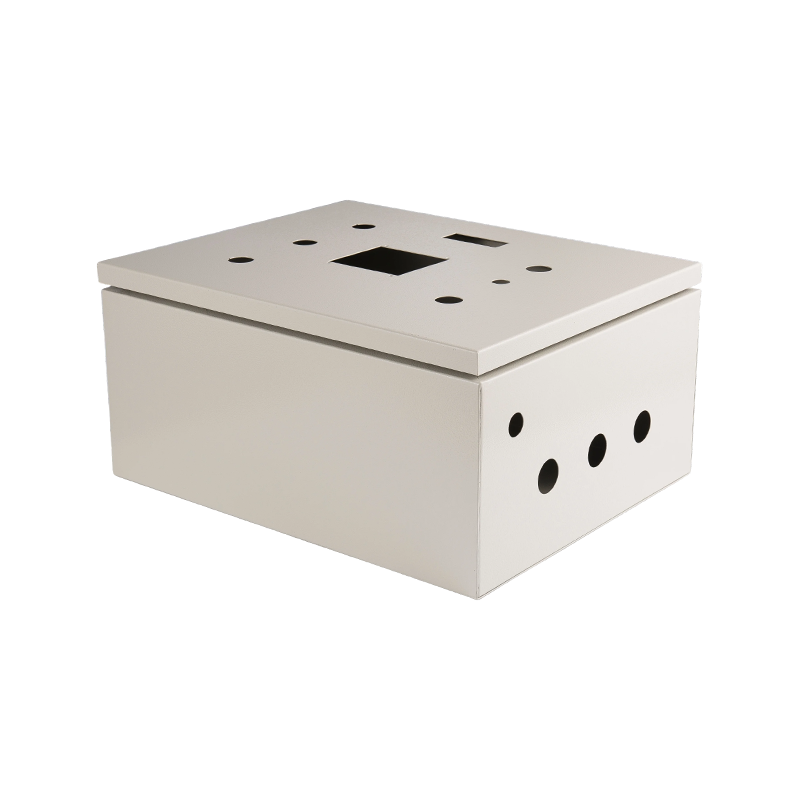
Compared to traditional mass production, custom sheet metal fabrication offers several notable advantages. First, it provides greater flexibility to design parts according to specific needs. Customers can customize the size, shape, hole placement, etc., of the sheet metal parts, without being constrained by standard designs. Secondly, custom fabrication can reduce material waste, as manufacturers can cut materials according to actual needs, rather than dealing with excess materials in mass production.
Another significant advantage is cost-effectiveness. In traditional mass production, production lines are highly automated, but for special parts, mass production may not meet customers' individual needs. Custom fabrication can avoid unnecessary production costs through small-batch production and flexible processing methods, reducing production costs and shortening lead times.
1.3 Technologies and Equipment for Custom Sheet Metal Fabrication
Realizing custom sheet metal fabrication requires advanced processing technologies and equipment. Common technologies in custom fabrication include laser cutting, CNC bending, CNC punching, etc. Laser cutting allows for high-precision cutting, suitable for complex shapes; CNC bending ensures precise control of bending angles, ensuring part accuracy and consistency; CNC punching can use molds to mass-produce parts with identical shapes, making it suitable for custom needs in large batches.
Furthermore, sheet metal fabrication facilities need to be equipped with modern equipment such as laser cutters, bending machines, punching machines, and more. These machines significantly enhance production efficiency and processing accuracy, making custom sheet metal fabrication more efficient and precise.
1.4 Challenges and Solutions in Custom Sheet Metal Fabrication
Although custom sheet metal fabrication has many advantages, it also faces certain challenges. First, due to the diversity of customer needs, custom fabrication may involve complex designs and technical requirements, which pose higher technical demands on manufacturers. Secondly, custom fabrication often requires a higher initial investment, particularly in equipment and technology. For small businesses, this can be a burden.
To solve these problems, many sheet metal fabrication factories innovate in technology and improve production efficiency to lower costs. For example, using CNC technology and automated equipment to improve production precision and efficiency can effectively reduce errors caused by manual labor. Additionally, using refined processes and material selections can improve part quality and durability, better meeting customers' custom needs.
Sheet Metal Stamping
2.1 Basic Process of Sheet Metal Stamping
Sheet metal stamping is a common sheet metal processing method primarily used for mass-producing parts with identical shapes and dimensions. It works by using stamping dies to shape sheet metal materials into the desired parts, making it an efficient and precise manufacturing process.
The basic process of sheet metal stamping includes mold design, material selection, stamping forming, and post-processing. Before stamping begins, a suitable mold must be designed, and appropriate sheet metal material must be selected. Common materials include stainless steel, aluminum alloy, cold-rolled steel, etc., with material selection depending on the part's operating environment and performance requirements.
2.2 Advantages of Sheet Metal Stamping
Sheet metal stamping has significant advantages in mass production. First, it can quickly and efficiently produce large quantities of identical parts. For standard parts, such as automotive components and appliance housings, sheet metal stamping can significantly increase production efficiency and shorten delivery times. Secondly, stamping can achieve high precision, especially when using precision molds and advanced equipment, allowing dimensional tolerances to be controlled to a very small range.
Another advantage is cost-effectiveness. Since stamping is suited for large-scale production, production costs can be significantly reduced through economies of scale. Additionally, stamping has minimal material waste, making the most efficient use of sheet metal materials and improving material usage efficiency.
2.3 Future Trends in Sheet Metal Stamping
As technology continues to improve, sheet metal stamping is evolving to become more efficient, precise, and intelligent. In the future, automation and intelligent control will play increasingly significant roles in sheet metal stamping, reducing labor costs and improving production flexibility. Additionally, innovations in stamping die technology, such as quick-change dies and multi-functional stamping systems, will further enhance production efficiency and reduce downtime.
Laser Cutting Sheet Metal
3.1 Principles of Laser Cutting
Laser cutting technology has been widely used in sheet metal processing, especially for manufacturing parts with high precision and complexity. Laser cutting uses a high-power laser beam to melt or vaporize the sheet metal, achieving precise cutting. Compared to traditional cutting methods, laser cutting has many unique advantages, especially in terms of precision, speed, and flexibility.
The core principle of laser cutting involves focusing the laser beam onto the sheet metal surface, rapidly raising its temperature above the melting point, causing it to melt or vaporize. Simultaneously, gases such as oxygen or nitrogen are blown into the cutting area to remove the molten material, ensuring clean and precise cuts. Laser cutting equipment is typically equipped with advanced CNC systems that precisely control the movement of the laser beam, enabling the cutting of complex shapes.
3.2 Applications of Laser Cutting
Laser cutting is widely applied across various manufacturing industries, particularly in situations where high precision and complex parts are required. For instance, in the automotive industry, laser cutting is used to cut body parts, engine components, etc. In aerospace, laser cutting is used to manufacture airplane fuselage parts and structural components. Laser cutting is essential in these high-precision industries as it ensures part dimensions and shapes meet strict standards while also reducing post-processing difficulties and costs.
Furthermore, laser cutting is also used extensively in electronics manufacturing. For example, it is applied to the production of smartphone casings, television frames, computer components, etc. As technology advances, laser cutting has become an integral part of high-end product manufacturing.
3.3 Advantages and Challenges of Laser Cutting
The greatest advantage of laser cutting is its high precision and speed. Traditional cutting methods often struggle to maintain accuracy when dealing with complex curves or small-sized parts, but laser cutting can handle these challenges with ease. Laser cutting systems are equipped with computer-controlled systems that precisely manage the laser's movement, ensuring each part's cut meets design specifications.
However, laser cutting is not without its challenges. First, it requires high-quality equipment, including high-power lasers and precise CNC systems, which results in higher initial investment costs. Additionally, laser cutting has limitations in terms of material thickness. It is most suitable for cutting thinner materials, and cutting very thick materials may result in lower efficiency and potential inconsistencies in the cut quality.
3.4 Future Trends of Laser Cutting
With technological advancements, laser cutting equipment continues to improve in terms of precision, speed, and efficiency. In the future, laser cutting will become even more efficient and intelligent. For example, integrating AI with laser cutting systems will enable more precise process control and automated production, improving production efficiency while reducing labor costs. Moreover, laser cutting will expand its application in new materials, further broadening its scope in manufacturing.
Sheet Metal Bending
4.1 Basic Principles of Sheet Metal Bending
Sheet metal bending is one of the most common processes in sheet metal fabrication, primarily used to bend sheet metal materials into the desired angles and shapes. By applying force through hydraulic presses, CNC bending machines, and other equipment, sheet metal can be bent precisely without damage. The precision and consistency of the bends are crucial for the functionality and appearance of the parts, making quality control of sheet metal bending a vital aspect of the manufacturing process.
4.2 Applications and Advantages of Sheet Metal Bending
Sheet metal bending is widely applied across industries, particularly in automotive manufacturing, construction, and home appliances. For example, automotive parts such as doors, car frames, and brackets require bending; the construction industry also requires sheet metal bending for window frames, air conditioner housings, and more. Additionally, sheet metal bending is crucial in the furniture and electronics industries.
The main advantage of sheet metal bending is its efficiency and flexibility. Through CNC technology, bending processes can be precisely controlled to ensure consistency and high-quality parts. Moreover, sheet metal bending can achieve complex shapes and angles, fulfilling customers' needs for custom and intricate structures.
4.3 Challenges and Solutions in Sheet Metal Bending
Despite its advantages, sheet metal bending faces challenges. First, bending accuracy is crucial, especially for complex parts. If not properly managed, the bending process can lead to part deformation or damage. To address this issue, modern sheet metal fabrication facilities use CNC bending machines for automated operations, significantly improving accuracy and reducing human errors.
Another challenge is selecting and processing sheet metal materials. Different materials have varying plasticity and strength, and choosing the wrong material or applying too much force can result in breakage or surface damage. To solve this, manufacturers typically conduct experiments and tests to ensure the correct materials and processes are used for the bending process.
Precision Sheet Metal Parts
5.1 Manufacturing Requirements for Precision Sheet Metal Parts
Precision sheet metal parts refer to those that require extremely high precision and tight tolerances during the manufacturing process. These parts are typically used in industries with strict requirements, such as aerospace, medical devices, and electronics. Manufacturing precision sheet metal parts not only demands exceptional craftsmanship but also relies on advanced equipment and strict quality control systems.
5.2 Applications of Precision Sheet Metal Parts
Precision sheet metal parts have a wide range of applications in high-end industries. In the aerospace sector, precision sheet metal parts are used to manufacture aircraft structural components, engines, etc., which require both high strength and precision. In the medical device industry, precision parts are used for surgical instruments and medical equipment, meeting stringent hygiene and safety standards. In electronics, precision sheet metal parts are found in the casings of smartphones, computers, televisions, etc., requiring both durability and aesthetic appeal.
5.3 Manufacturing Challenges of Precision Sheet Metal Parts
The manufacturing of precision sheet metal parts presents several challenges. First, material selection and processing are crucial. The quality of the materials and the processing methods used directly impact the final part quality. Incorrect materials or processes can lead to underperformance. Additionally, precision manufacturing requires high-end equipment, and even the slightest error can lead to part failure. Therefore, manufacturers rely on advanced CNC equipment, laser cutting, and other high-precision technologies to ensure the desired accuracy.
Conclusion
Sheet metal parts play an essential role in modern manufacturing. From custom sheet metal fabrication to precision part manufacturing, each processing method has its unique advantages and applications. By carefully selecting the appropriate manufacturing process, materials, and equipment, part precision, quality, and production efficiency can be greatly improved.
With continuous technological advancements, sheet metal processing is evolving into a smarter, more refined field. From laser cutting to precision part manufacturing, new technologies and equipment are constantly emerging, driving the innovation of the industry. In the future, sheet metal parts manufacturing will become even more intelligent and precise, providing more efficient and environmentally-friendly solutions for various industries.
Sheet metal part manufacturing is a challenging yet promising field, requiring constant innovation and improvement to meet the increasing demand for high-quality, high-performance parts in the market.