Why does the power supply casing directly affect the stability and lifespan of power supply equipment?
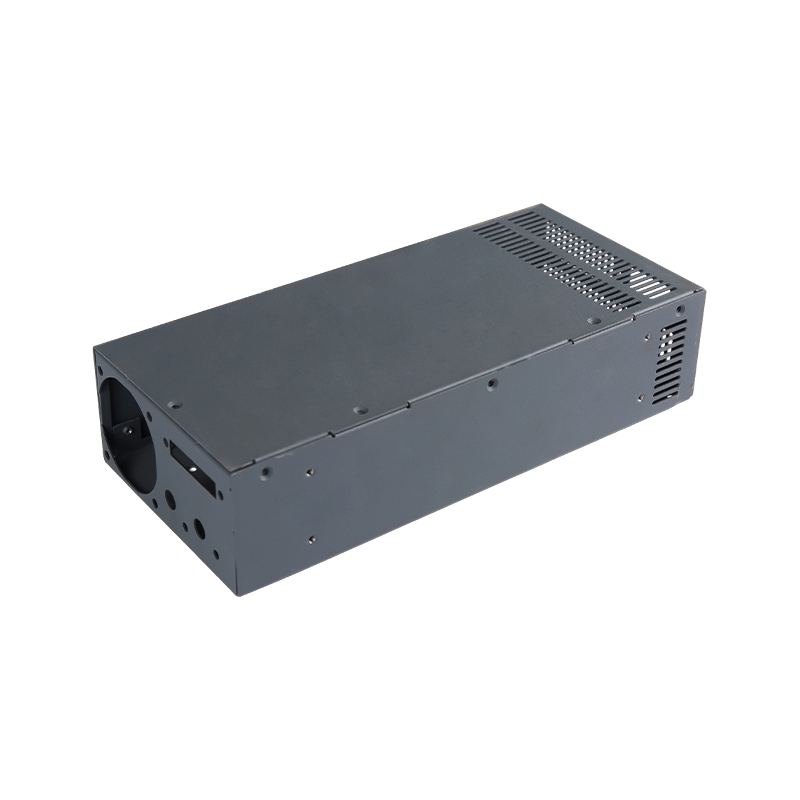
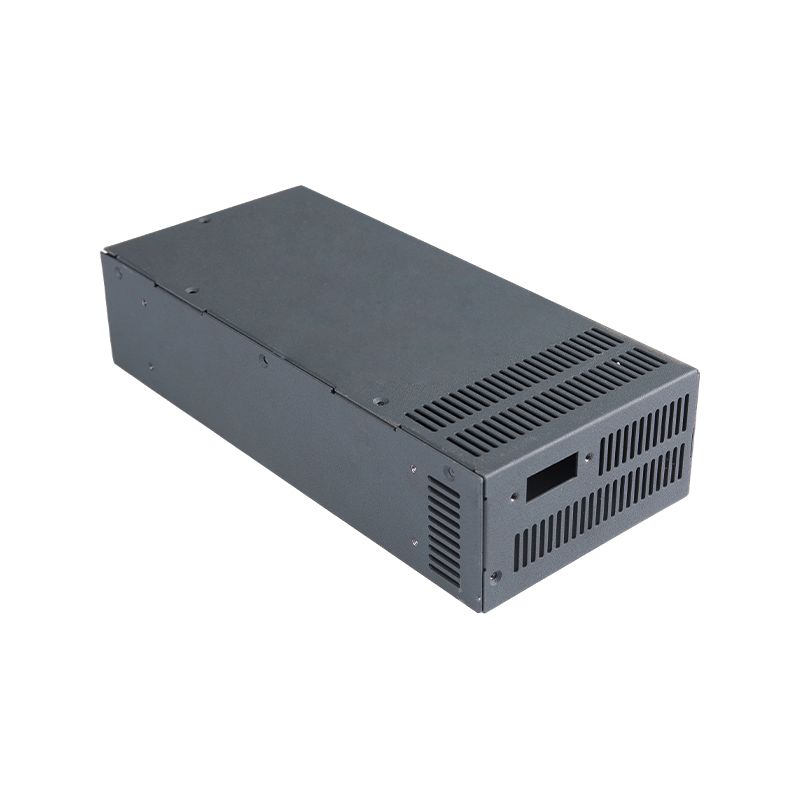
Many people's first impression of a power supply casing is simply a metal shell used to house the power module, primarily protecting the internal circuitry from damage. However, this understanding is clearly too simplistic when viewed within the context of modern electronics manufacturing. As power systems evolve towards higher power density, higher frequencies, and miniaturization, the power supply casing has actually evolved into a critical structural component affecting the overall performance and reliability of the device.
Especially in industrial control, communication base stations, and medical equipment, the design quality of the power supply casing often directly determines the stable operation of the equipment. It is no longer just a shell in a visual sense, but a crucial element involved in thermal management, electromagnetic compatibility, and structural safety.
The true role of the power supply casing is changing
In traditional designs, the power supply casing's task was relatively simple, mainly providing basic mechanical protection. However, in modern application environments, it needs to address multiple complex requirements simultaneously.
On the one hand, the internal power module generates strong electromagnetic interference during high-frequency switching. If the shielding design is insufficient, it can affect the stability of surrounding circuits and even the entire system. On the other hand, the heat accumulation caused by high-power operation also requires the casing to have good thermal conductivity to quickly conduct and release heat.
Furthermore, in some industrial scenarios, equipment needs to withstand continuous vibration or impact, which places higher demands on the structural rigidity of the casing. Therefore, power supply casings have evolved from simple protective structures into system components with multiple engineering functions.
Material Selection Determines the Upper Limit of Basic Performance
Material selection is a crucial step in the manufacturing of power supply casings, as different materials directly determine the application boundaries of the product.
Cold-rolled steel sheet is one of the most common choices, offering high structural strength and stability, suitable for most standard industrial power supply products. Galvanized steel sheet adds corrosion resistance, making it more suitable for applications in high humidity or complex environments. Aluminum alloys, due to their light weight and good thermal conductivity, are often used in equipment with high heat dissipation requirements or weight sensitivity.
Material is not the sole factor determining performance; it needs to be optimized in conjunction with structural design and manufacturing processes to truly play its role.
Manufacturing Precision is Determining Product Reliability
Behind a high-quality power supply casing often lies the support of high-level manufacturing processes. In modern sheet metal processing systems, laser cutting, CNC bending, and automated welding have become core process combinations.
Laser cutting ensures dimensional accuracy in complex structures, making assembly interfaces more stable. CNC bending ensures consistent structural angles, thereby improving the consistency of batch products. Automated welding not only improves production efficiency but also reduces human error, resulting in more uniform and reliable welds.
The integrated application of these processes has transformed power supply housings from traditional rough-machined parts into high-precision industrial structural components.
Customization is becoming a mainstream trend
With the diversification of downstream industries, standardized power supply housings can no longer meet all application scenarios. More and more customers are beginning to make customization requests, such as special size structures, specific installation methods, and even structural optimization designs for specific heat dissipation paths.
Under this trend, factories with design capabilities and flexible manufacturing capabilities are gaining an increasingly clear advantage.
Changzhou Yasu Metal Technology Co., Ltd., founded in 2019 and located in Changzhou, Jiangsu Province, adheres to the development philosophy of professionalism, innovation, and continuous improvement in the metal processing field. The company is equipped with advanced production equipment such as laser cutting, CNC bending, and automatic welding, specializing in sheet metal and hardware processing, with an annual manufacturing capacity of approximately 50 million RMB.
As a Chinese manufacturer of customized power supply enclosures and an OEM/ODM power supply enclosure factory, the company not only provides standardized products but also offers in-depth customization according to customer needs, including various solutions such as switching power supply enclosures and DIN rail power supply structural components. Simultaneously, the company has a professional design team that can balance structural optimization and manufacturability, helping customers shorten product development cycles.
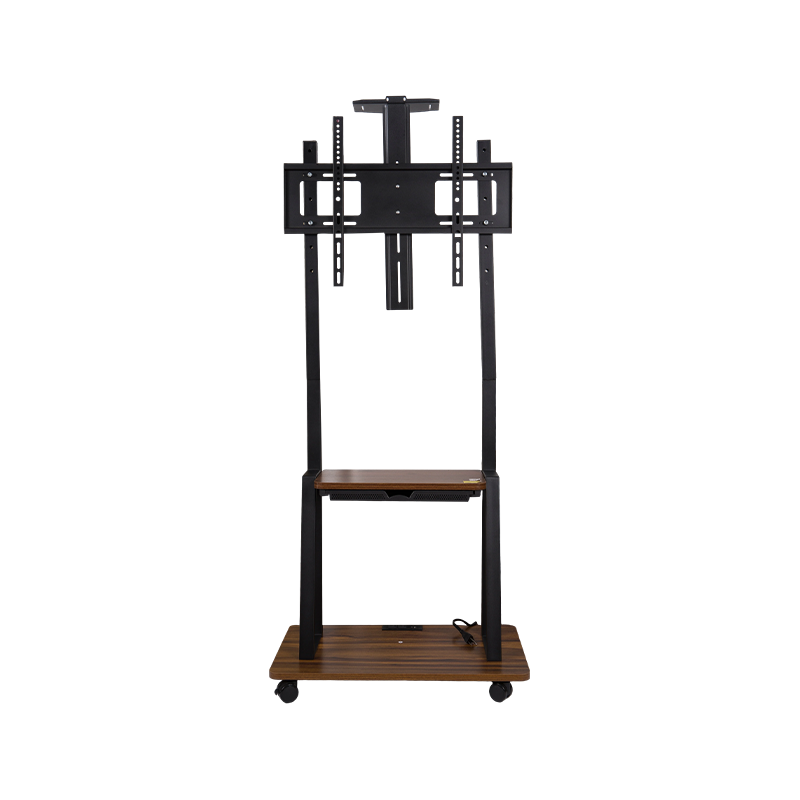
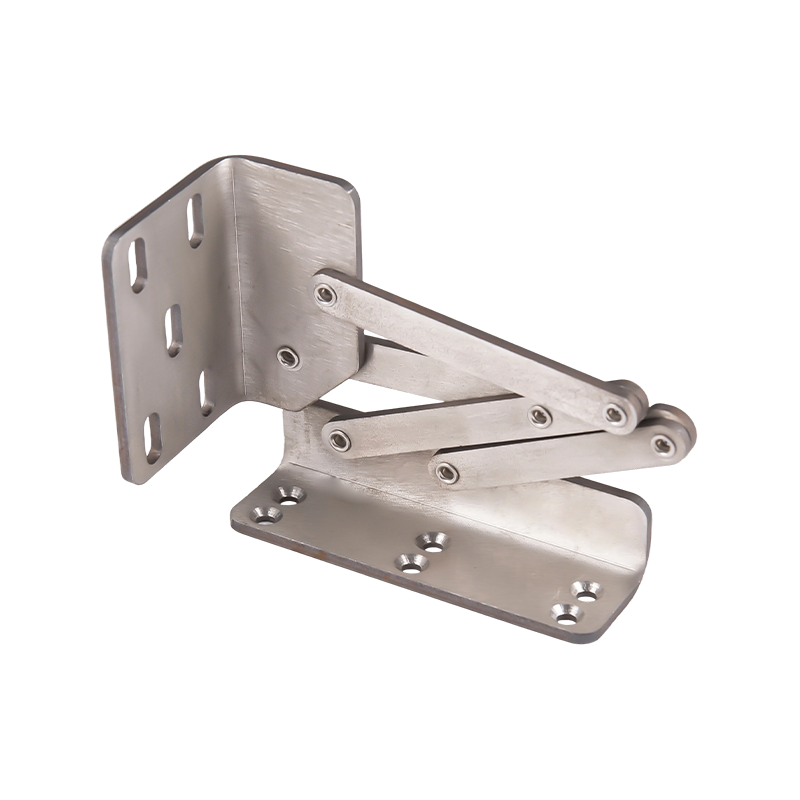
Besides power supply enclosures, the company also has mature experience in rail transit hinges, medical sheet metal parts, and export mobile TV brackets, enabling it to provide systematic metal structure solutions for different industrial scenarios.
FAQ
Q1: What is the most important function of a power supply enclosure?
Core functions include mechanical protection, electromagnetic shielding, and thermal management; these three together determine the stability of the power supply system.
Q2: Why do different power supply products require different enclosure designs?
Because power ratings, installation environments, and thermal requirements differ, the structural design must match the specific application scenario.
Q3: Is aluminum alloy always better than steel?
Not necessarily. Aluminum alloy has good heat dissipation but is expensive and has lower strength, while steel plates offer greater structural stability. The choice depends on the specific needs.
Q4: How long does it typically take to customize a power supply casing?
It depends on the complexity of the structure and the manufacturing requirements. Generally, after design confirmation, it can enter the rapid prototyping and mass production stage.
Q5: How to assess a supplier's manufacturing capabilities?
Focus on whether they possess complete sheet metal processing capabilities, including laser cutting, CNC bending, and automated welding, as well as whether they have an engineering design support team.



 English
 русский
 Español