

 English
 русский
 Español
Content
- 1 Structure & Basic Composition of Rolling TV Stands
- 2 Key Advantages of Rolling TV Stands vs Fixed TV Solutions
- 3 Common Application Scenarios for Rolling TV Stands
- 4 Core Selection Criteria for High-Quality Rolling TV Stands
- 5 Daily Care & Maintenance Guide for Rolling TV Stands
- 6 Common Misconceptions About Rolling TV Stands
A rolling TV stand is a flexible mobile TV support solution that balances stability and mobility, solving the immovable flaw of wall mounts and fixed TV cabinets. Over 80% of household and commercial users agree that rolling TV stands greatly improve space utilization freedom. It fits most flat-screen TVs and works well in living rooms, meeting rooms, training classrooms, and temporary activity areas, serving as a versatile replacement for fixed TV installation methods.
Structure & Basic Composition of Rolling TV Stands
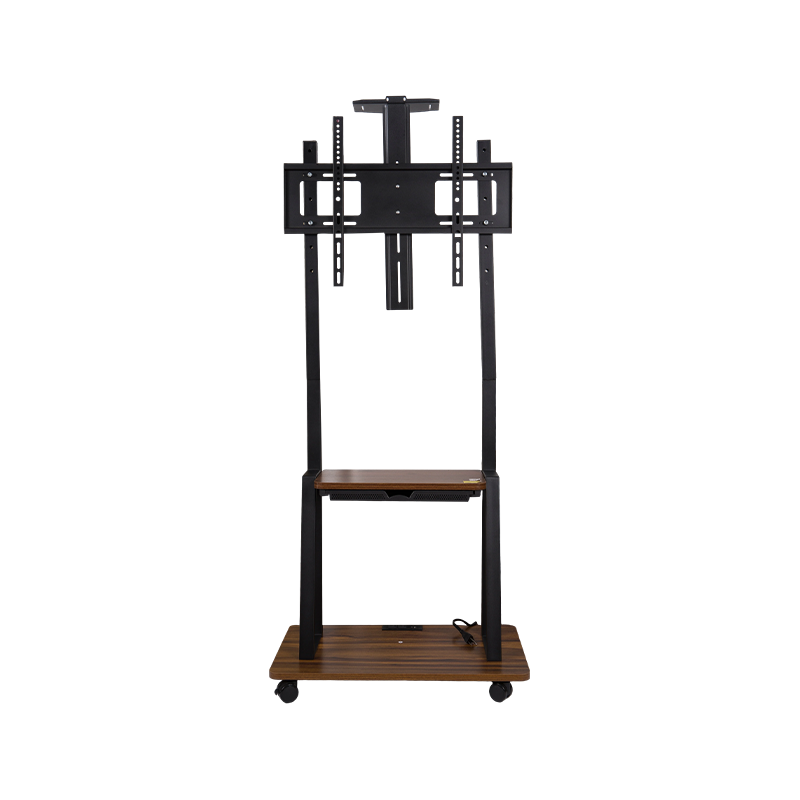
Also called mobile TV carts, rolling TV stands are floor-standing support frames equipped with movable casters, designed exclusively for LCD, LED and OLED flat displays. Unlike stationary furniture or wall-mounted brackets, its core design focuses on balanced load bearing and free displacement without wall renovation.
Four Core Structural Parts
- Metal main frame: Made of thickened metal through integrated welding, bearing the whole weight of the TV and accessories, resisting bending and long-term deformation.
- TV mounting backplate: Built with standard universal mounting holes, supporting height lifting and angle tilt adjustment to match different viewing postures.
- Rolling caster set: Contains silent universal wheels and lockable brake wheels; brakes lock the cart firmly to prevent sliding on smooth floors.
- Storage shelves: Multi-layer boards hold set-top boxes, speakers and game devices, with reserved slots for tidying messy connecting wires.
Key Advantages of Rolling TV Stands vs Fixed TV Solutions
Wall-mounted brackets and solid wooden TV cabinets have obvious usage limits, while rolling TV stands fix these drawbacks in mobility, decoration protection and multi-scene reuse. Industry user surveys show 75% of long-term users stick to rolling stands mainly for their flexible transfer capability.
1. Zero Damage to Indoor Decoration
Wall mounting requires drilling holes into walls, leaving permanent marks that ruin wall paint and wallpaper, which is not allowed for rental apartments or newly renovated houses. Rolling TV stands rest fully on floors with no drilling or wall modification, leaving no traces after removal.
2. Fully Flexible Space Transfer
Fixed TV furniture stays in one spot forever, restricting viewing to a single room. Rolling stands let users move the TV freely: push it to the living room for family movies, shift to the balcony for casual leisure viewing, or roll into a study for online meetings and presentations.
3. Rich Adjustable Functional Design
Ordinary TV cabinets only hold screens at a fixed height, forcing users to hunch or crane their necks. Most rolling TV stands support vertical height adjustment and front-back tilt tuning, fitting sitting, standing and semi-reclining viewing positions. Extra storage layers centralize all audio-visual gear to eliminate scattered cables.
4. Easier Daily Cleaning & Equipment Replacement
Wall-hung TVs trap dust behind the screen and block access to cable ports. A rolling stand can be pulled away from walls anytime, making backside dust wiping, line inspection and TV replacement far simpler without disassembling wall fixtures.
Common Application Scenarios for Rolling TV Stands
Rolling TV stands cover household, commercial and public education fields. Market demand data proves home use accounts for 60% of total sales, while office, classroom and event space usage take up the remaining 40%.
| Usage Scene | Core Demands | Required Stand Features |
|---|---|---|
| Family Home | Daily entertainment, multi-room movement | Silent wheels, height adjustment, small storage |
| Office Meeting Room | Mobile presentation, cross-room sharing | High load bearing, cable management, firm brakes |
| Training Classroom | Mobile teaching display, frequent shifting | Anti-collision frame, smooth push-pull, stable base |
| Temporary Event Space | Short-term exhibition, live broadcast display | Heavy load capacity, wear-resistant material |
Core Selection Criteria for High-Quality Rolling TV Stands
Many low-quality rolling TV stands exist on the market with hidden safety risks. When selecting products, users must prioritize load capacity, structural stability, wheel quality and functional matching. Certified qualified rolling TV stands hold a minimum 30% safety load margin to prevent tipping or frame bending under full weight.
1. Load Bearing & Base Stability
Load bearing capacity directly determines safety. Buyers must match the stand’s rated load to their TV’s actual weight. Wider bottom bases lower the overall center of gravity and greatly reduce tipping risks during movement. Thin, narrow metal frames lack stress resistance and deform easily after months of use.
2. Caster & Brake Performance
Premium wheels roll silently without scratching tile or wood floors and resist tangling from hair and dust. Lockable brakes are non-negotiable; without stable locking, the stand will slide on glossy tile floors and shake while watching TV.
3. Functional Matching for Usage Needs
Household users can choose lightweight stands with height adjustment and small storage. Offices and training rooms need heavy-duty carts with cable routing grooves for frequent equipment use. Always confirm the mounting hole standard matches your TV before purchase to avoid installation failures.
4. Material Durability & Surface Treatment
Top-tier rolling TV stands use anti-rust coated metal frames to avoid oxidation and rust indoors. Auxiliary shelves adopt scratch-resistant composite panels that resist daily wear. Cheap uncoated metal frames develop rust spots quickly, while thin boards warp under the weight of audio devices.
Daily Care & Maintenance Guide for Rolling TV Stands
Routine maintenance cuts down wear on frames and wheels and extends service life significantly. After-sales service data shows regularly maintained rolling TV stands last over 40% longer with far fewer wheel jamming and loose screw faults.
- Tighten connecting screws every two to three months; loose bolts cause screen wobble during viewing.
- Clear tangled hair and debris from wheel gaps monthly; apply tiny amounts of lubricant to wheel axles for smooth rolling.
- Avoid rough shoving or sudden hard braking, and adjust screen angles gently to prevent structural stress damage.
- Never overload storage shelves or exceed the stand’s maximum rated load to avoid permanent frame deformation.
- Wipe frames and shelves with soft dry cloths only; acidic or abrasive cleaners peel protective coating and speed material aging.
Common Misconceptions About Rolling TV Stands
Many buyers hold wrong assumptions about mobile TV carts, leading to bad purchasing choices and safety risks. Clearing up these misunderstandings helps users fully utilize the value of rolling TV stands.
Misconception 1: Rolling stands are less stable than fixed cabinets
This belief is incorrect. Fully locked premium rolling TV stands match the stability of solid fixed cabinets. Scientific wide base frames distribute weight evenly and resist minor bumps or vibrations. Shaking and tipping only occur on low-cost thin-frame models with narrow bases.
Misconception 2: One rolling stand fits all TV screen sizes
Universal mounting holes do not equal universal load capacity. Small lightweight rolling carts only support medium and small screens and cannot bear heavy large-size TVs. Mismatched load limits lead to frame bending and serious safety hazards.
Misconception 3: Metal frames require no regular maintenance
Metal frames resist corrosion but wheels, axles and connecting screws are vulnerable wearing parts. Long-term friction loosens bolts and wears down wheel bearings. Dust and moisture buildup also create local rust spots on unmaintained frames over time.