

 English
 русский
 Español
Content
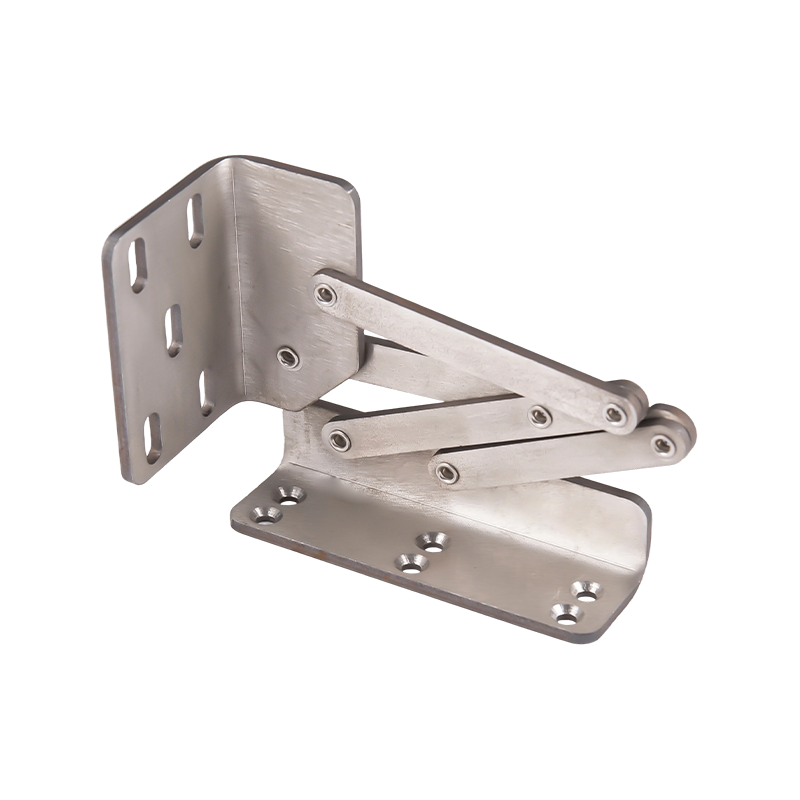
Multiple joint hinges are advanced mechanical components specifically engineered to facilitate multi-axis movement and enhanced load-bearing capacity. Unlike traditional single-axis hinges, they utilize multiple pivot points to distribute mechanical stress, accommodate complex motion trajectories, and maintain structural integrity under dynamic loads. These versatile mechanisms are essential in industrial machinery, architectural frameworks, and specialized engineering projects where standard linear articulation is insufficient.
Fundamental Concepts of Multiple Joint Hinges
To fully appreciate the utility of multiple joint hinges, it is necessary to understand their structural mechanics and how they diverge from conventional hinge designs. By incorporating several pivot axes, these components transform rigid connections into highly adaptable joints.
Defining the Multi-Pivot Mechanism
A multiple joint hinge operates on the principle of compounded articulation. Instead of a single pin connecting two leaves, the mechanism features a series of interconnected knuckles and pins. This configuration allows the hinge to rotate and shift along different planes simultaneously. The compounded articulation prevents binding and significantly reduces localized friction, which is a common failure point in heavy-duty single-axis hinges.
Comparison with Traditional Hinges
Standard hinges are designed primarily for simple door-swing applications, restricting movement to a single rotational axis. When subjected to lateral stress or torsional forces, traditional hinges often suffer from pin shearing or leaf deformation. Multiple joint hinges, conversely, absorb these multi-directional forces by allowing slight lateral play and angular deflection. This makes them inherently more resilient in environments subjected to vibrations or structural settling.
Core Benefits and Functional Advantages
The adoption of multiple joint hinges provides several distinct mechanical advantages. These benefits directly translate to longer service life, increased safety, and greater design flexibility for engineers and builders.
Stress Distribution and Load Bearing
Because the weight and force are shared across multiple pivot points, the stress concentration on any single pin is dramatically reduced. This distributed load bearing allows multiple joint hinges to support significantly heavier doors, panels, and access hatches without experiencing metal fatigue. In heavy industrial settings, this capability prevents catastrophic hinge failure and reduces the frequency of mechanical replacements.
Multi-Axis Flexibility and Alignment Compensation
One of the most valuable attributes of a multiple joint hinge is its ability to compensate for misalignment. During construction or prolonged use, structures may shift due to thermal expansion, foundation settling, or mechanical wear. Multi-joint hinges can flex and adjust to these slight geometric changes without compromising the seal or operation of the attached door or panel. This ensures smooth operation even when the surrounding framework is not perfectly square.
- Accommodates torsional twisting without pin damage
- Allows for simultaneous rotational and lateral movement
- Reduces the mechanical resistance during operation
Common Application Scenarios
The unique properties of multiple joint hinges make them indispensable in various sectors. Their ability to manage complex forces ensures they are specified in projects demanding high mechanical reliability.
Industrial Machinery and Robotics
In automated manufacturing and robotics, precise and reliable movement is critical. Multiple joint hinges are utilized in safety guards, robotic arm enclosures, and heavy maintenance access panels. They allow technicians to open large, heavy guards with minimal effort while ensuring the panels remain securely anchored when closed. The multi-axis capability is particularly useful in robotic applications where components must articulate around complex obstacles.
Architectural and Structural Design
Modern architecture frequently features non-traditional geometries, including pivoting walls, angled doors, and complex glazed facades. Multiple joint hinges enable the movement of large structural elements that do not conform to standard rectangular frames. For example, in large industrial warehouses, these hinges are used on heavy rolling or folding doors where wind loads and structural flexing would quickly destroy standard hardware.
Key Considerations for Selection
Selecting the appropriate multiple joint hinge requires a thorough analysis of the operational environment and mechanical requirements. Engineers must evaluate several critical factors to ensure optimal performance and longevity.
Material Selection and Environmental Resistance
The material composition dictates the hinge's strength, weight, and resistance to environmental degradation. Stainless steel is highly recommended for corrosive environments or outdoor applications, as it prevents rust and maintains structural integrity. For lighter applications where weight reduction is paramount, high-grade aluminum alloys may be utilized. In environments with extreme chemical exposure, specialized polymer coatings can be applied to the metal components to further enhance durability.
Load Requirements and Range of Motion
It is crucial to calculate both the static and dynamic loads the hinge will bear. Engineers must consider the weight of the door or panel, as well as any additional forces such as wind pressure or pneumatic resistance. Furthermore, the required range of motion must be mapped out. While multiple joint hinges offer multi-axis movement, the degree of lateral and rotational play varies by design.
| Consideration | Light-Duty Application | Heavy-Duty Application |
|---|---|---|
| Primary Material | Aluminum or Mild Steel | Forged Stainless Steel |
| Pivot Point Configuration | Dual-axis articulation | Multi-axis with thrust bearings |
| Environmental Coating | Standard zinc plating | Electropolished or chemical-resistant |
Installation and Maintenance Best Practices
Proper installation and routine maintenance are vital to maximize the functional lifespan of multiple joint hinges. Even the most robustly engineered hinge will fail prematurely if installed incorrectly or neglected.
Proper Installation Techniques
When installing multiple joint hinges, ensuring precise alignment is critical. While these hinges can compensate for minor misalignments, gross inaccuracies during installation will induce unnecessary torsional stress. It is recommended to use heavy-duty fasteners and ensure that the mounting surface is completely flat. Using backing plates can distribute the clamping force more evenly across the mounting surface, preventing localized deformation.
- Securely clamp the hinge to the mounting surface before drilling.
- Use fasteners rated for the shear and tensile loads of the application.
- Verify the full range of motion after tightening all fasteners to check for binding.
Routine Maintenance Procedures
Maintenance protocols should be established based on the frequency of use and the severity of the environment. In industrial settings, periodic lubrication of the pivot pins is essential to minimize friction and prevent galling. Technicians should also routinely inspect the hinges for signs of wear, such as elongated pin holes or metal dust accumulation. Replacing worn pins proactively can prevent catastrophic damage to the hinge leaves and the surrounding structure.