

 English
 русский
 Español
Content
When you put a switched-mode power supply into production, one of the first questions is how to house it. The housing needs to fit the PCB, leave enough airflow around components, offer mounting points, and still meet safety expectations. A well-designed sheet metal switch power supply housing solves these problems because it combines mechanical strength, thermal conduction, and production-friendly tolerances in a single formed part.
In short, for most industrial and commercial power supplies, sheet metal remains the most balanced choice. This guide explains the key decisions behind switch power supply housing selection, from materials to fabrication to supplier capabilities.
What Is a Switch Power Supply Housing?
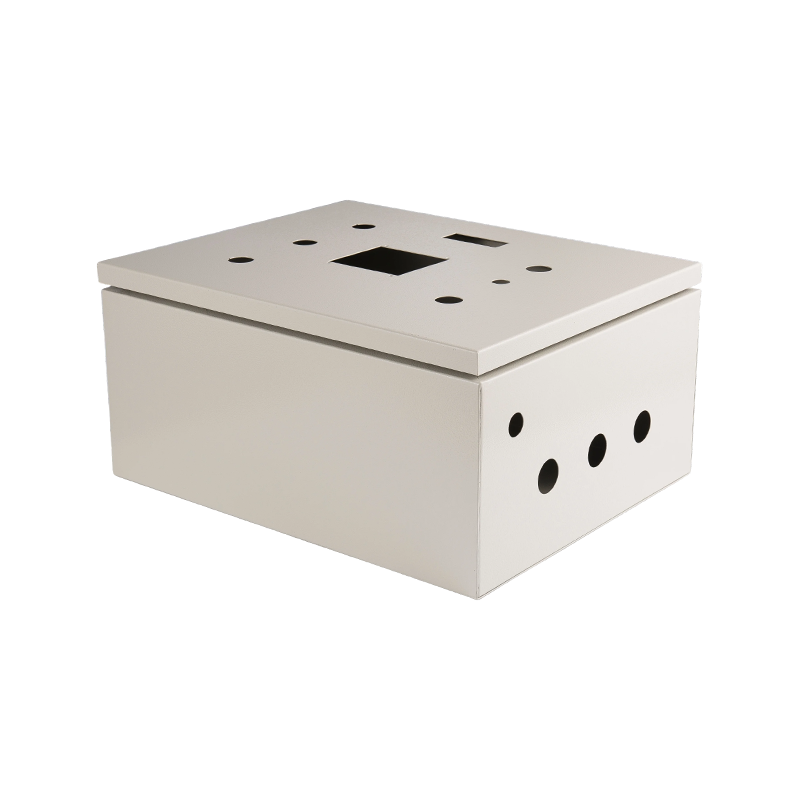
A switch power supply housing is a metal enclosure that protects the switching power circuit, isolates live parts, guides cooling airflow, and gives the product a stable mechanical footprint. It may be a simple U-shaped cover with two end plates, or a full enclosure with ventilation grilles and cable glands. The term usually refers to the sheet metal shell used with an AC-DC or DC-DC switched-mode power supply, not the internal PCB or heat sink.
Typical housings are made from cold-rolled steel, galvanized steel, stainless steel, or aluminum. If you are exploring layout ideas, you can start with our sheet metal housings for switch power supplies to see how standard designs are structured.
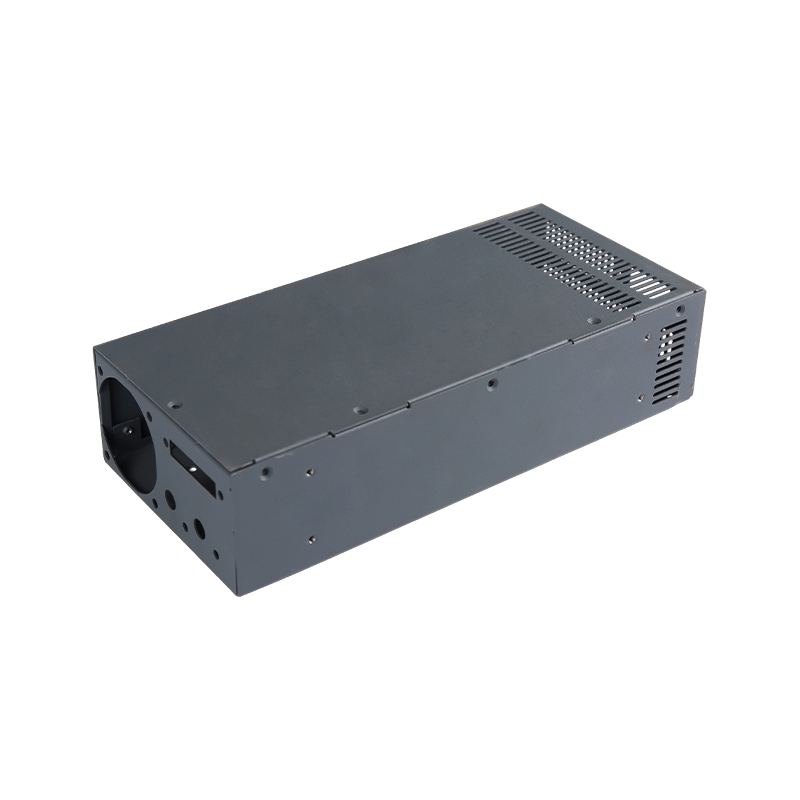 Wholesale Metal Switching Power Supply Housing Supplier, CompanyChangzhou Yasu Metal Technology Co., Ltd. is a China Wholesale OEM/ODM Metal Switching Power Supply Housing Supplier and Company. Our swi...View Product →
What to Consider When Selecting a Housing
Different applications drive different requirements. Use this quick reference to identify what matters most for your project.
Thermal layout
Power losses in a switched-mode supply can reach tens or hundreds of watts. The housing must allow air to flow through properly placed vents or include mounting provisions for an external fan.
Safety and materials
Sharp edges, unstable fixing, or insufficient grounding create shock risks. Use a conductive metal shell with a clear earth point and maintain spacing between electrical parts and the cover.
Mounting compatibility
DIN-rail, chassis, or panel mounting changes the location of holes, cutouts, and standoffs. Confirm tolerances with your PCB dimensions and connector layout before ordering.
EMI and environment
For emissions-sensitive equipment, a continuous metal shell improves shielding. Gaskets, filtered vents, and IP-rated cable entries are available for dusty or damp environments.
Common Materials for Switch Power Supply Housings
Material selection is not only about cost. It affects shielding, corrosion resistance, weight, and appearance. The table below compares the sheet metal materials most often used for switch power supply housings.
| Material | Strengths | Best suited for | Relative cost |
|---|---|---|---|
| SPCC cold-rolled steel | High strength, low cost, good magnetic shielding | Indoor industrial equipment with powder coating | Low |
| SGCC galvanized steel | Corrosion resistance, good formability | Humid or semi-outdoor enclosures | Low to medium |
| Stainless steel (304/430) | Excellent corrosion resistance, high strength | Food, chemical, or harsh environments | High |
| Aluminum (5052) | Lightweight, good thermal conduction, non-magnetic | Weight-sensitive or high-frequency power designs | Medium to high |
For a deeper comparison of electrical and mechanical trade-offs, see how to choose the right material for your power supply. When your design grows into a larger assembly, our electrical box and cabinet product range provides proven enclosure options with consistent fabrication quality.
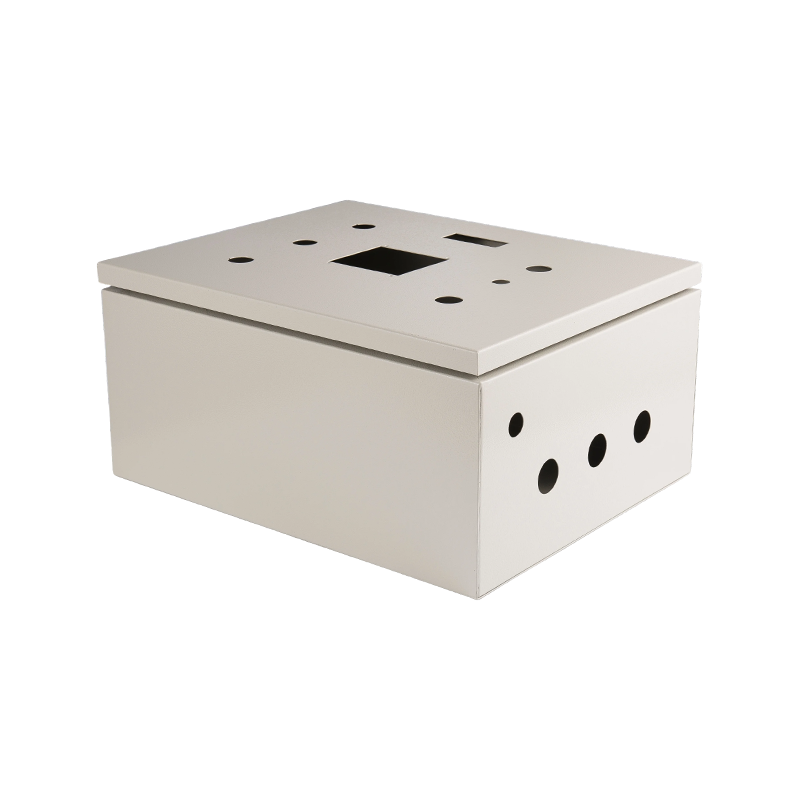 Custom Metal Distribution Box Manufacturer, FactoryChangzhou Yasu Metal Technology Co., Ltd. is a China Custom OEM/ODM Metal Distribution Box Manufacturer and Factory. We provide electrica...View Product →
How Custom Sheet Metal Housings Are Fabricated
Most switch power supply housings follow the same production flow. Understanding these steps helps you judge a supplier's capability and avoid design delays.
Design review and DFM
Your drawing or 3D model is checked for bend radii, hole spacing, and material availability. A quick DFM pass can reduce cost without changing function.
Laser cutting and punching
Flat blanks are cut from sheet metal with high accuracy. Laser cutting is typical for medium batches, while punching suits higher volumes.
Bending and forming
CNC press brakes fold blanks into channels, U-shapes, or boxes. Precision here keeps connector cutouts aligned and panel edges clean.
Welding and finishing
Edges are welded where needed, then the housing goes through grinding, cleaning, and powder coating or anodizing.
Because each step is controlled by the same set of drawings, small changes to hole positions or notches can be made without expensive tooling. That is why custom fabrication of a switch power supply housing is cost-effective for series from a few hundred to tens of thousands of units. Many customers start from a proven design and use our custom fabrication service to adjust ventilation, mounting brackets, or connector cutouts.
If you want a production-ready starting point, the 42 series switch power supply housing is a compact option that can be modified to match your exact PCB layout.
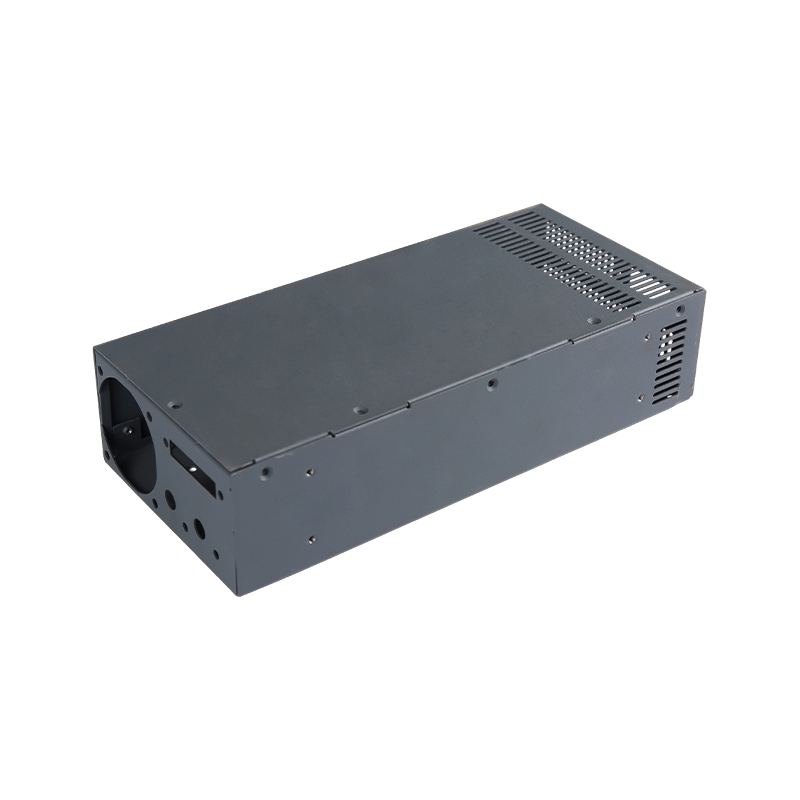 Custom Power Supply Casing Manufacturer, FactoryChangzhou Yasu Metal Technology Co., Ltd. is a China Custom OEM/ODM Power Supply Casing Manufacturer and Factory. We offer high-quality m...View Product →
Checking a Switch Power Supply Housing Supplier
The housing quality depends as much on the supplier's equipment and work discipline as on the original design. Here are specific things to verify before you place an order.
- In-house laser cutting and CNC bending: This shows that sheet metal tolerances can be controlled without outsourcing layers.
- Robot welding for repeatable seams: Important when more than a few hundred housings are ordered.
- Inspection equipment: Calipers, height gauges, and surface testers reduce the risk of mismatched parts.
- Design communication: A good supplier will ask about material thickness, bend radius, and finish before quoting.
A supplier with both thin-sheet and thick-sheet experience can also help you avoid over-specifying. For example, a standard switch power supply housing does not need stainless steel in most indoor applications, but it does need a reliable grounding point. The right supplier will point that out during design review.
Frequently Asked Questions about Switch Power Supply Housings
What material is best for a switch power supply housing?
For most indoor industrial and IT applications, SPCC cold-rolled steel with a powder-coated finish is the best combination of strength, cost, and shielding. If the environment is humid, use galvanized steel or aluminum. If weight is critical, aluminum is a better choice.
Can I customize an existing switch power supply housing without redesigning everything?
Yes. Standard sheet metal housings are often modified by adjusting vent slots, hole patterns, mounting brackets, and connector cutouts. A DFM review helps you keep changes minimal while making the housing suit your exact PCB layout. Our custom fabrication service works this way.
How much ventilation does a switch power supply housing need?
It depends on total power loss, operating ambient temperature, and whether fans are used. A basic rule is to allow enough vent area above and below hot components, and to orient vents for natural convection. If the supply dissipates more than 50 to 60 W, forced-air cooling is usually required.
Should I paint or powder-coat the housing?
Powder coating is durable and provides electrical insulation on external surfaces. However, avoid coating contact areas that need grounding or heat transfer. For aluminum housings, anodizing is another option that is scratch-resistant and has higher thermal emissivity.
Choosing a switch power supply housing does not have to be a bottleneck. Start with a clear picture of your thermal load, mounting method, and environmental rating. Then match those requirements to a sheet metal design, review material and finish options, and choose a supplier with the right production equipment. If you are still weighing trade-offs, the fastest way forward is to send a drawing to a fabricator and ask for a DFM opinion.