

 English
 русский
 Español
Content
A metal switching power supply housing is a formed sheet metal enclosure—typically 0.8 to 2.0 mm cold-rolled steel, galvanized steel, or aluminum—that protects the converter circuit, suppresses electromagnetic interference, and carries heat away from hot components. If you are sourcing one, three decisions matter more than everything else: the material and thickness you choose, how the vents and seams are engineered, and whether your fabricator can hold the same tolerances on unit one thousand as on unit one.
That emphasis is deliberate. A switching power supply turns current on and off tens of thousands of times per second, runs hot, and radiates noise that can disturb nearby electronics, so its housing works as a structural part, a heat spreader, and an EMC barrier at once. Bending accuracy, seam quality, and coating coverage therefore translate directly into the reliability of the finished power supply.
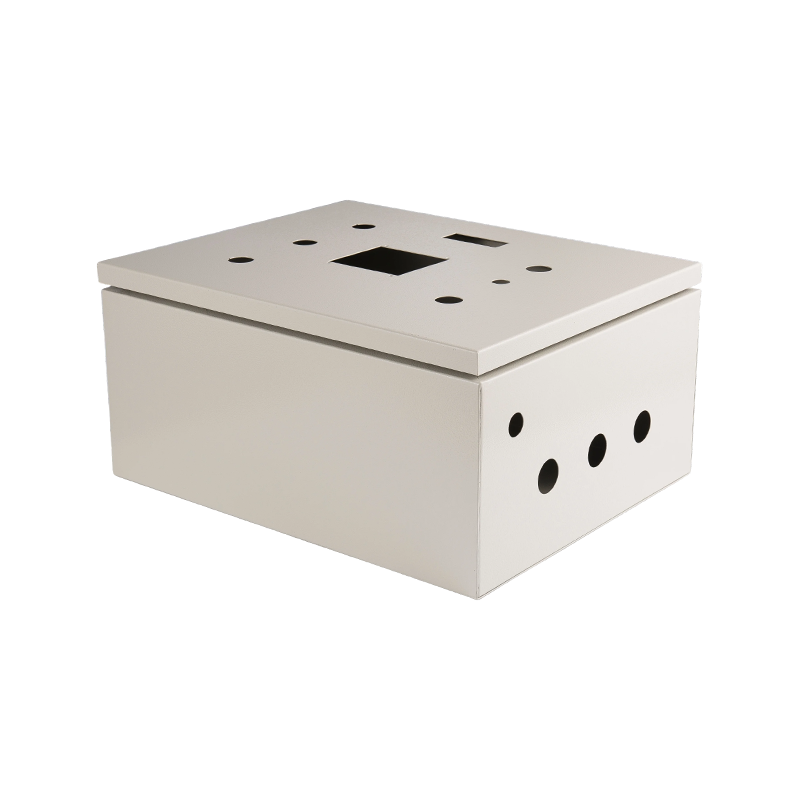
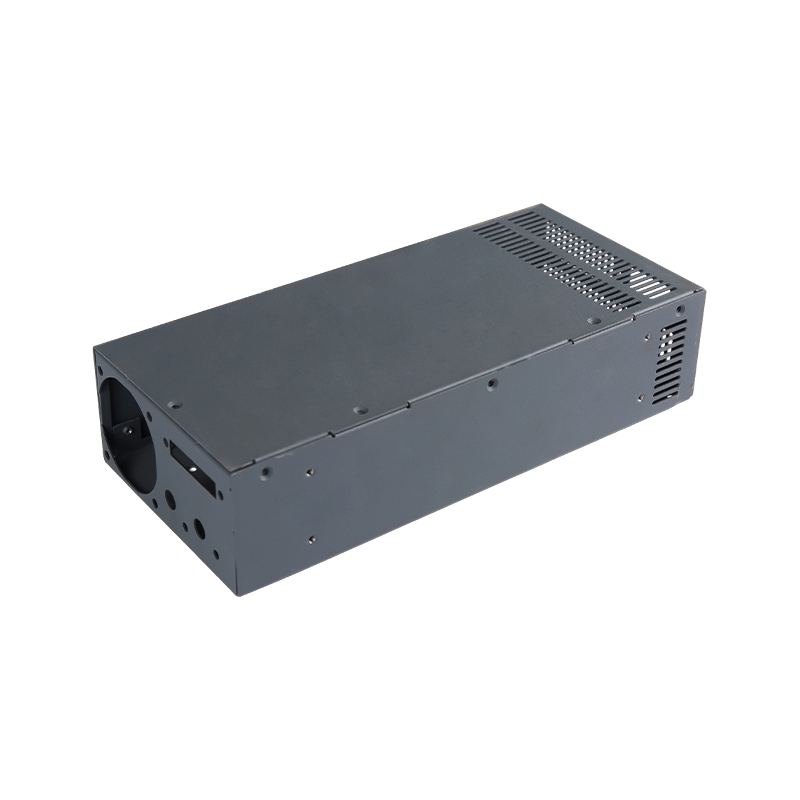 Switching Power Supply Metal HousingA sheet metal enclosure serving as structure, heat spreader, and EMC barrier for switching power supplies. Its bending accuracy, seams, and coating directly determine the reliability of the finished unit.View Product →
What the Housing Actually Does
Four jobs, one box. Knowing them explains the questions any experienced supplier will ask about your drawing:
- Mechanical protection. The enclosure carries the board, survives handling and vibration, and keeps fingers and tools away from live parts.
- EMI shielding. A continuous metal enclosure acts as a Faraday cage, containing switching noise at its source instead of letting it reach nearby equipment.
- Heat transfer. Hot components such as switching transistors and rectifiers often mount straight onto the housing wall, making the enclosure part of the cooling system; vent slots add convection on top.
- Safety and grounding. Grounding terminals, creepage and clearance distances, and a solid barrier between the user and the mains side all depend on the housing being made correctly.
These functions trade off against each other: more vent area improves cooling but weakens shielding, while a thicker panel adds stiffness but slows heat transfer. A housing has to be balanced for its power rating and environment, which is why copying one from a different project rarely ends well.
Material Choices Compared
Material selection drives both unit cost and long-term performance. Cold-rolled steel with a powder coating remains the default for indoor industrial power supplies, galvanized steel adds corrosion resistance for telecom and humid environments, aluminum wins where weight or passive cooling matters, and stainless steel is reserved for harsh or washdown locations. Our guide to choosing the right material for your power supply walks through this decision in more depth.
| Material | Corrosion protection | Common thickness | Best fit | Relative cost |
|---|---|---|---|---|
| Cold-rolled steel (SPCC) | Powder coating or paint required | 0.8–2.0 mm | Indoor industrial and LED power supplies | Low |
| Galvanized steel | Zinc layer, optional top coat | 0.8–1.5 mm | Telecom, humid plants, sheltered outdoor sites | Low to medium |
| Aluminum (alloy 5052) | Natural oxide, anodizing optional | 1.0–3.0 mm | Fanless and weight-sensitive designs | Medium |
| Stainless steel (304) | Inherent, no coating needed | 0.8–1.5 mm | Medical, food processing, corrosive environments | High |
Steel remains the workhorse: it is inexpensive, bends and welds easily, and adds magnetic shielding that aluminum cannot provide. Aluminum costs more and needs different welding skills, but in a fanless supply its ability to spread heat across the whole housing often justifies the premium.
How a Housing Is Fabricated, Step by Step
Nearly every metal switching power supply housing follows the same five-stage route, whether the order is fifty pieces or fifty thousand:
- Blanking. The flat pattern is laser cut, or punched when volumes justify tooling; mounting holes, AC inlet cutouts, and vent openings are all created here.
- Forming. Louvers and knockouts are punched, then a CNC press brake bends the flanges. Bend radii stay close to the material thickness so the metal does not crack.
- Welding. Corners and seams are joined, with robotic welding keeping the welds identical across a batch, while spot welding attaches the studs and standoffs that carry the board.
- Surface treatment. Parts are deburred, then powder coated or galvanized. Areas that need electrical contact, such as ground studs, are masked before coating.
- Inspection and packing. Dimensions are checked against the drawing, coating thickness is verified, and a first article is approved before mass production proceeds.
Tolerances are where capable shops separate themselves from average ones. In common practice, a well-equipped fabricator holds hole positions within about ±0.1 mm and bending angles within roughly ±0.5 degrees, tight enough for PCB standoffs to line up without rework.
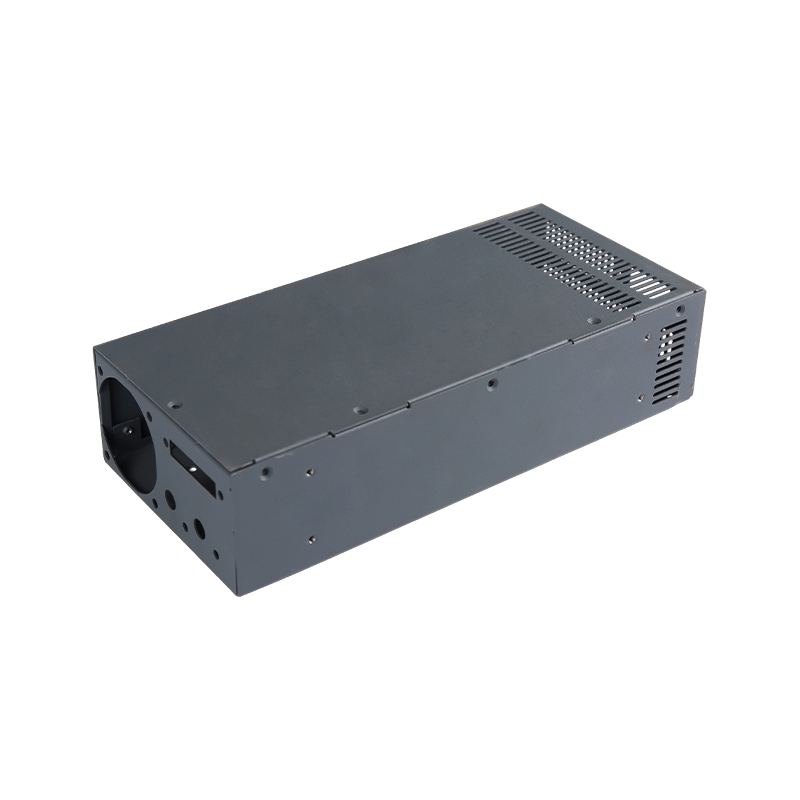 Custom Metal Switching Power Supply Housing SupplierBuild-to-print housings demand tight tolerances, continuous shielding seams, dust-controlled vents, and coating that respects grounding points—details a capable fabricator must control from certificate to finished box.View Product →
Design Details That Decide Long-Term Quality
Between the material certificate and the finished box sit dozens of small decisions that surface years later. Seams need overlap or gasketing so the shield stays continuous, vents must admit air without admitting dust, coating must stay off grounding points, and standoffs or weld tabs must match how the board is actually serviced. The scenarios below cover the trade-offs buyers raise most often:
Finer vent mesh or gasketed seams, plus a clear definition of the ingress protection the site really needs.
Galvanized steel under powder coat, drip edges at openings, and corrosion-resistant fasteners throughout.
Aluminum body with extra surface area, and hot components bonded directly to the housing wall.
Stamping tooling amortizes quickly, so per-unit cost drops sharply once volumes stabilize.
Laser cutting plus CNC bending avoids tooling cost and keeps the lead time short.
Keep the larger system in mind as well. A switching power supply housing rarely lives alone: it bolts inside a larger electrical cabinet, slides onto a rack shelf, or sits beside other modules. Fixing mounting hole patterns and interface tolerances early prevents rework on both the housing and the cabinet that receives it.
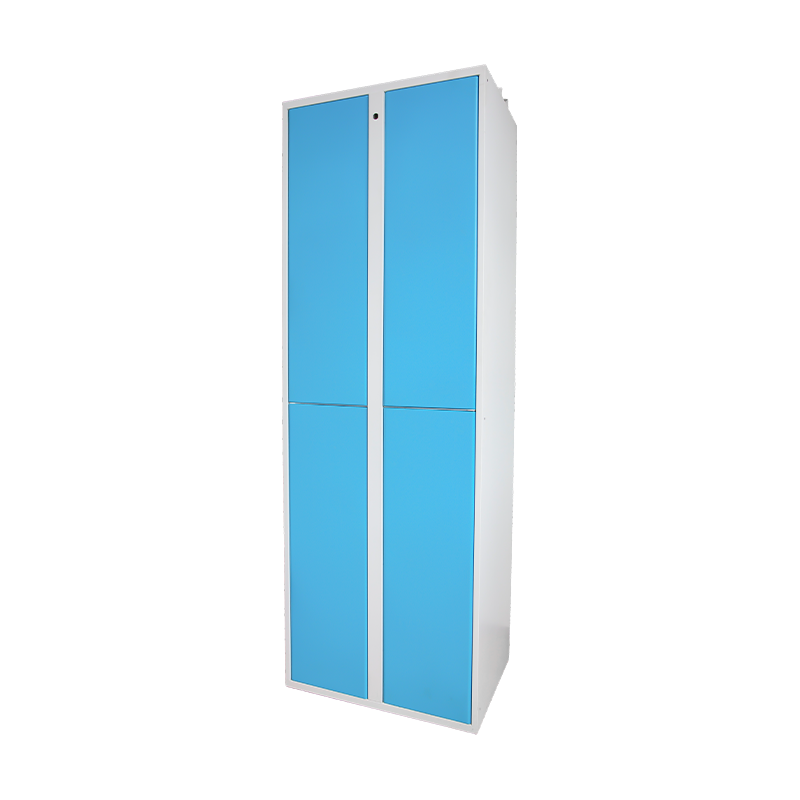
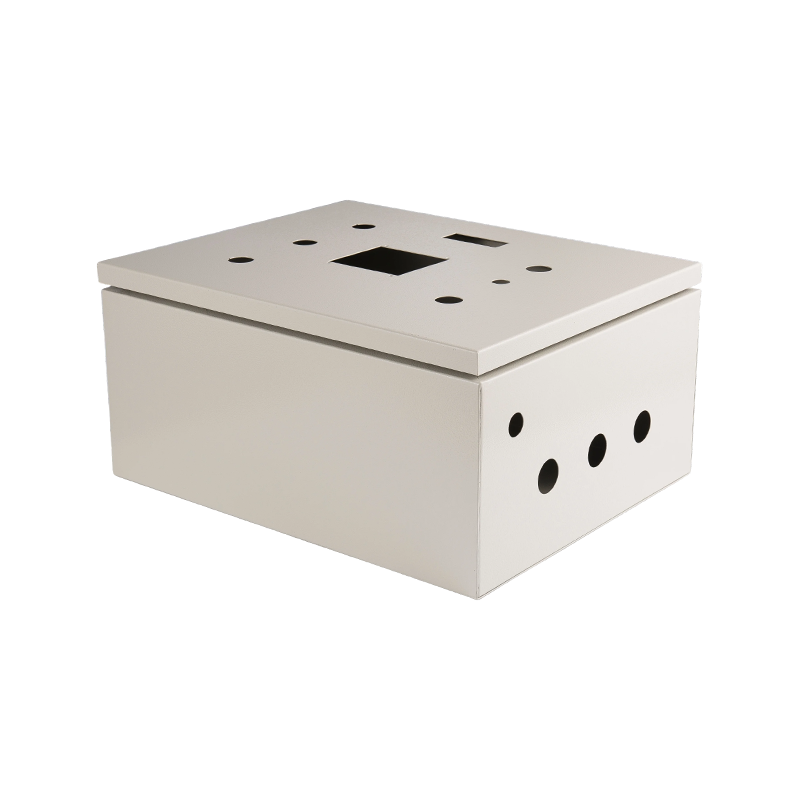 Metal Electrical Box and CabinetCustomizable sheet metal cabinets with waterproofing, dustproofing, and heat dissipation, designed to mount power supply housings and other modules with mounting holes and interface tolerances settled early.View Product →
Choosing a Fabrication Partner: A Buyer's Checklist
The housing is a build-to-print part, so the fabricator's process control matters as much as the design. Before placing an order, check the following:
- Process coverage. Laser cutting, CNC bending, welding, and coating under one roof reduce handoffs and stop tolerances from accumulating between vendors.
- Drawing support. A shop that reviews your DXF or STEP files and flags bend conflicts before cutting saves an entire sampling cycle.
- Batch consistency. Ask how dimensions are controlled after the first article and whether inspection records ship with each batch.
- Coating quality. Confirm the coating system, thickness, and adhesion testing, especially for surfaces that must stay conductive for grounding.
- Capacity headroom. Repeat orders grow, and a partner with spare laser and press brake capacity will not become your bottleneck in year two.
Equipment tells you a lot here. A factory running 6000 W dual-table laser cutters, multiple CNC press brakes, and robotic welding cells can keep prototypes and volume production in one process chain, which removes a common source of first-batch surprises. When your housing is non-standard—an unusual depth, a custom mounting flange, a mixed steel-and-aluminum build—a dedicated custom sheet metal fabrication service takes you from drawing to finished sample with no tooling investment.
Frequently Asked Questions
What sheet thickness should a switching power supply housing use?
Most designs land between 0.8 and 2.0 mm. Below about 1.0 mm, panels flex and grounding points can deform during handling; above 2.0 mm you pay for weight without much benefit, unless the housing also serves as a heat sink.
Does a metal housing really reduce electromagnetic interference?
Yes. A continuous conductive enclosure contains switching noise like a Faraday cage. The weak points are long seams, oversized vents, and ungrounded panels, which is why overlap joints, ground studs, and careful vent sizing matter.
Is aluminum always better than steel?
No. Aluminum cools better and weighs less, but it costs more, needs different welding skills, and offers no magnetic shielding. Steel suits most indoor industrial supplies; aluminum earns its premium mainly in fanless or weight-sensitive designs.
What does a fabricator need for an accurate quote?
A 2D drawing with material, thickness, bend angles, hole positions, and coating specification is the minimum, and a 3D STEP model speeds up review. Add annual quantity and target price, and a usable quotation usually follows within a few working days.
Reference Sources
- Sheet metal fabrication industry common practice
- General engineering design practice for power supply enclosures