

 English
 русский
 Español
Content
Sheet metal hinges are produced by four principal forming methods: progressive die stamping, press brake forming, roll forming, and machining from thicker stock. Progressive stamping is the default for volume production because it coins the knuckle directly out of the sheet; press brake forming covers prototypes and low-volume custom doors; roll forming delivers continuous piano hinges in long lengths; and machining handles thick, high-load hinges that formed sheet cannot practically carry. Which method is right for you depends on three variables: annual quantity, leaf thickness, and whether the knuckle is formed from the sheet itself or assembled from two interlocking halves.
The distinction matters more than it first appears. A hinge looks like a simple part, but the knuckle—the rolled barrel that carries the pin—concentrates nearly all of the engineering risk. If the two leaves do not line up within a few tenths of a millimetre, the pin binds, the door sags, and the assembly fails its cycle test long before the material itself shows any wear. Forming method and knuckle strategy should therefore be decided together, at the drawing stage, rather than after samples arrive.
The Four Forming Methods at a Glance
Use the table below as a first filter, then confirm the details against your door weight, cycle requirements, and finish specification.
| Method | Typical volume | How the hinge takes shape | Best fit |
|---|---|---|---|
| Progressive die stamping | High volume, repeat orders | Knuckle is coined out of the strip in a multi-station die; two leaves interlock around the pin | Cabinet, enclosure, and rail interior doors |
| Press brake forming | Prototypes to medium volume | Leaves bent on a CNC press brake; knuckle curled with tooling or built from two half-leaves | Custom machine doors, guards, replacement parts |
| Roll forming | Continuous long runs | Strip is curled progressively through roller stands into one continuous knuckle | Piano hinges and long continuous hinges |
| Machining from solid stock | Low volume, heavy duty | Barrel machined from bar; leaves laser-cut and joined around the pin | Thick, high-load gates and access panels |
How Each Method Forms the Hinge
Progressive die stamping
In stamping, coil stock is fed through a progressive die where each stroke performs one operation: piercing the pin hole, coining the knuckle bulge, forming the leaf offsets, and finally cutting the finished leaf free. The knuckle itself is created by coining—squeezing the metal so a half-round bulge extrudes from the sheet. Two mating leaves, one bulged upward and one downward, then nest together around the pin. The method earns its tooling cost through repeatability: once the die is tuned, every thousandth hinge matches the first, which is exactly what high-cycle equipment doors and rail vehicle interiors demand. It also favors suppliers with a deep press bank, since several hinge sizes can run on different presses in parallel.
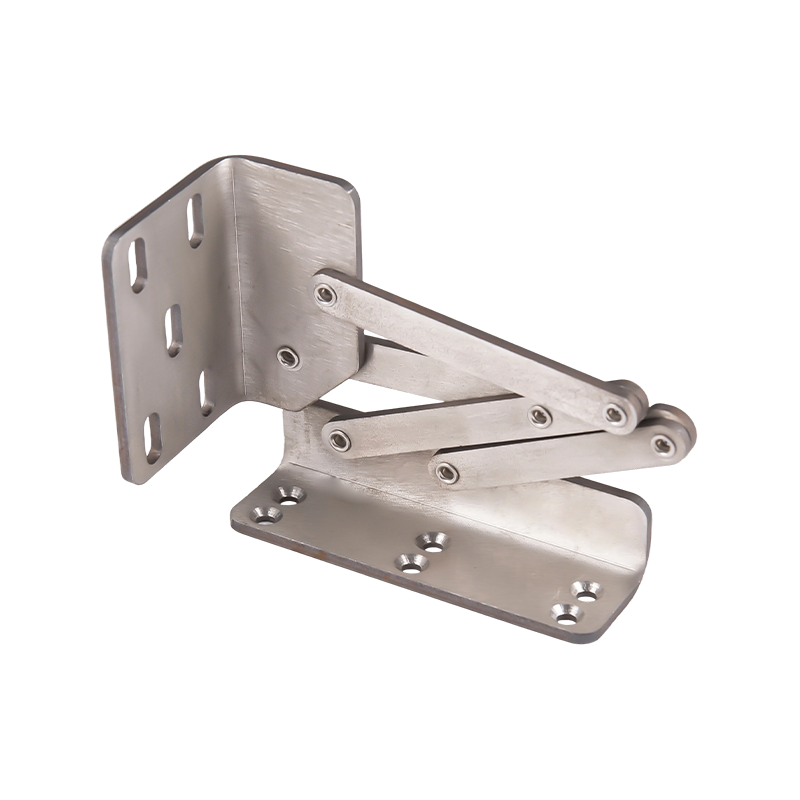 Custom 304 Stainless Steel Hinges for Stamped Leaf ProductionPrecision-stamped stainless steel hinges offering repeatable quality, high load capacity, and custom sizes—ideal for high-cycle equipment doors and rail interiors.View Product →
Press brake forming
Press brake forming starts from a laser-cut or sheared blank. The leaf profile is bent in one or two hits, and the knuckle is either curled with a dedicated curling tool or built by forming two half-leaves that are welded or mechanically joined around the pin. Tooling cost is far lower than a progressive die, which makes this the practical route for prototypes, replacement parts, and custom equipment doors produced in dozens rather than tens of thousands. The trade-offs are slower cycle times and greater dependence on operator setup, so hole-to-knuckle alignment should be verified on the first article before the batch is released.
Roll forming
Roll forming is the method behind continuous piano hinges. A narrow strip passes through a series of roller stands, each one bending the edge a little further until it closes into a continuous knuckle; the pin is fed in as the strip exits the last stand. Because the process is continuous, length becomes almost a free variable—a hinge can run the full height of a wardrobe or the full width of an equipment bay without a joint in the barrel.
Machining from solid stock
When the section is too thick to bend cleanly—typically beyond roughly 6 mm—the knuckle is machined from solid bar and the leaves are laser-cut or machined separately before assembly. Cost per part is high, but for heavy gates, vault doors, and machinery access panels, the strength and pin alignment of a machined barrel justify the expense.
Forming the Knuckle: The Steps That Decide Quality
Whichever forming route you choose, a stamped or brake-formed hinge follows the same production logic. Here is how a typical run proceeds:
- Blanking and piercing. The coil or sheet is cut to leaf width, and the pin hole plus mounting holes are pierced while the material is still flat. Locating these features early locks in the alignment reference for every later operation.
- Coining the knuckle. The half-round bulge is formed under high pressure. This is the highest-load step in the sequence: insufficient pressure leaves a loose, sloppy knuckle, while excessive pressure thins and work-hardens the metal, which later shows up as cracking at the bulge edge.
- Forming the leaf. Offsets, swages, and mounting bends are pressed in. A swage is often added so the two leaves clear each other when the hinge closes.
- Deburring and cleaning. Burrs inside the barrel are removed. Any burr left in the knuckle will bind the pin within the first few hundred cycles.
- Pin insertion and staking. The pin is inserted, its ends are staked or headed, and samples are cycle-tested for free swing before the batch is packed.
Material and Tolerance Points to Confirm
Cold-rolled steel remains the default hinge material because it forms predictably and accepts plating well. Austenitic stainless steel such as 304 is specified wherever the hinge will face moisture or cleaning chemicals, but it work-hardens quickly and springs back more, so the die design or bend allowance must compensate. Aluminum keeps weight down on moving assemblies, and brass forms easily, appearing where appearance matters as much as function. Whichever alloy is chosen, keep the inside bend radius at least equal to the material thickness. Tighter radii raise the risk of cracking along the bend, especially when the bend line runs parallel to the rolling direction of the sheet.
On the drawing, the tolerances that actually decide whether the hinge works are the pin hole diameter, the distance between knuckle centres on each leaf, and the position of the mounting holes. If those three are left as "per standard" without stated values, the leaves may arrive individually accurate yet refuse to swing together. Stating hole-to-knuckle position and pin fit explicitly costs nothing at the design stage and prevents the most common rejection reason: a hinge that binds the moment it is assembled.
Matching the Method to Your Project
As a working rule: commit to a progressive die once annual volume clears a few thousand pieces and the geometry is frozen; stay on the press brake below that line, or whenever the design is still moving; specify roll forming the moment a hinge needs to run continuously for more than a metre; and move to machined construction when leaf thickness or load exceeds what formed sheet can carry.
If your parts sit in the custom middle ground—unusual leaf widths, medical enclosures, non-standard hole patterns, rail vehicle interiors—it pays to work with a fabricator that can take your drawing, analyse it for bend and knuckle feasibility, and quote the forming route before tooling is committed. Our custom sheet metal fabrication service covers exactly this stage, from drawing breakdown to first-article samples. The same drawing-driven approach is explained further in our article on how custom sheet metal fabrication benefits different industries.
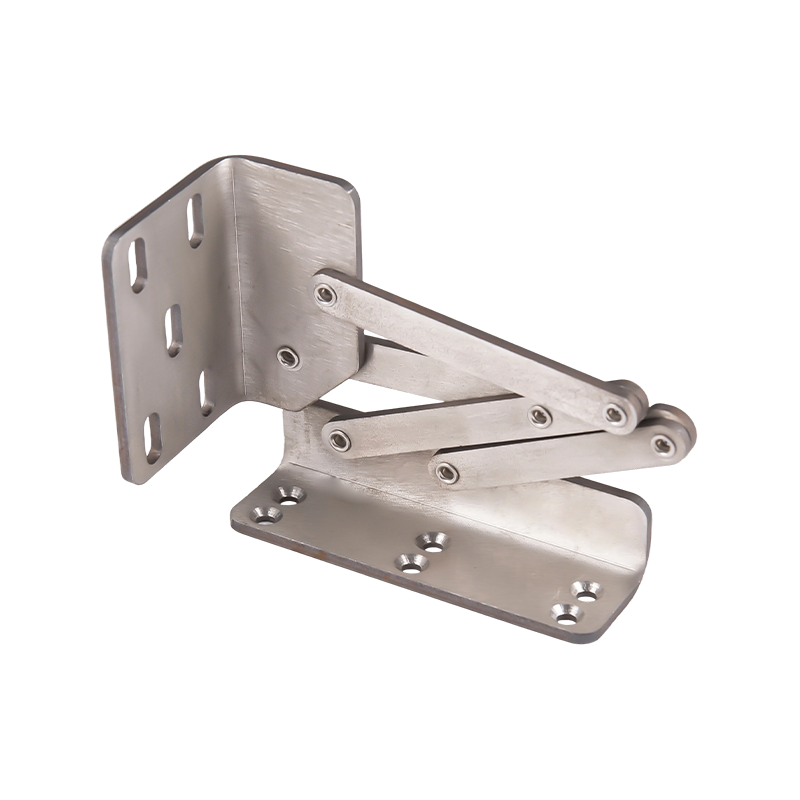 Custom Multiple Joint Hinges for Multi-Axis MotionMulti-axis hinges delivering smooth pivoting across planes, with customizable materials and finishes—suited to rail, medical, and custom-formed applications.View Product →
Frequently Asked Questions
Can a knuckle be formed without a dedicated progressive die?
Yes. On a press brake, a curling tool can close the knuckle in a dedicated hit, or the hinge can be built from two half-leaves joined around the pin. Expect more setup time and wider variation than stamping, but far lower tooling cost to get started.
What sheet thickness can still be hinge-formed?
Most stamped and brake-formed hinges fall between roughly 1 mm and 3 mm. Beyond that range, forming loads, springback, and cracking risk climb quickly, and machined construction usually becomes the more economical answer.
Why does a newly formed hinge bind on its pin?
The usual causes are misaligned knuckles between the two leaves, burrs left inside the barrel, or a pin diameter that does not match the pierced hole tolerance. Checking hole-to-knuckle position on the first article catches nearly all of these problems.
How is springback handled when forming stainless steel hinges?
Through slight overbending, bottoming or coining the bend, and a bend allowance adjusted for the alloy. Stainless work-hardens, so the correction is larger than for cold-rolled steel and should be proven on a sample before the full batch runs.
References
- Published sheet metal fabrication handbooks on bend radius and springback practice
- Hinge manufacturer engineering guides on knuckle coining and pin fit
- First-article inspection practice commonly applied in custom sheet metal hinge production