

 English
 русский
 Español
Content
A 32-inch display that gets rolled from a training room to a reception area three times a week asks very different things of a stand than a screen that never leaves the wall. Buyers who pick a small mobile TV stand on price and wheel count alone often replace it within two years, once the brakes stop holding or the column starts to lean.
The short answer first: a small mobile TV stand is worth buying when three things line up. The load rating needs roughly 25 percent headroom over your panel weight, at least two casters need locks that still grip after months of use, and the frame needs to be steel that stays square. Get those right and the stand fades into the background of daily work. Get them wrong and you end up with a wobbling column that nobody wants to move. The sections below cover what "small" means on a spec sheet, a four-step matching process, the manufacturing details that separate a two-year stand from a ten-year one, and the mistakes that shorten a stand's life.
What "Small" Means on a Spec Sheet
Manufacturers usually label a mobile TV stand as small when it is built for panels in the 23 to 43 inch class, though a few designs stretch to 50 inches. The panel is only part of the load, however. A media player, a small camera, or a soundbar on the accessory shelf adds another 1 to 3 kg, and that weight sits higher on the column, where it affects stability more than the screen itself.
| Screen size | Typical panel weight | Common VESA patterns | Suggested minimum load rating |
|---|---|---|---|
| 24 in | 3-4 kg | 75x75, 100x100 | 15 kg |
| 32 in | 5-8 kg | 100x100, 200x100 | 20 kg |
| 43 in | 8-12 kg | 200x100, 200x200 | 25 kg |
| 50 in | 12-16 kg | 200x200, 400x200 | 30 kg |
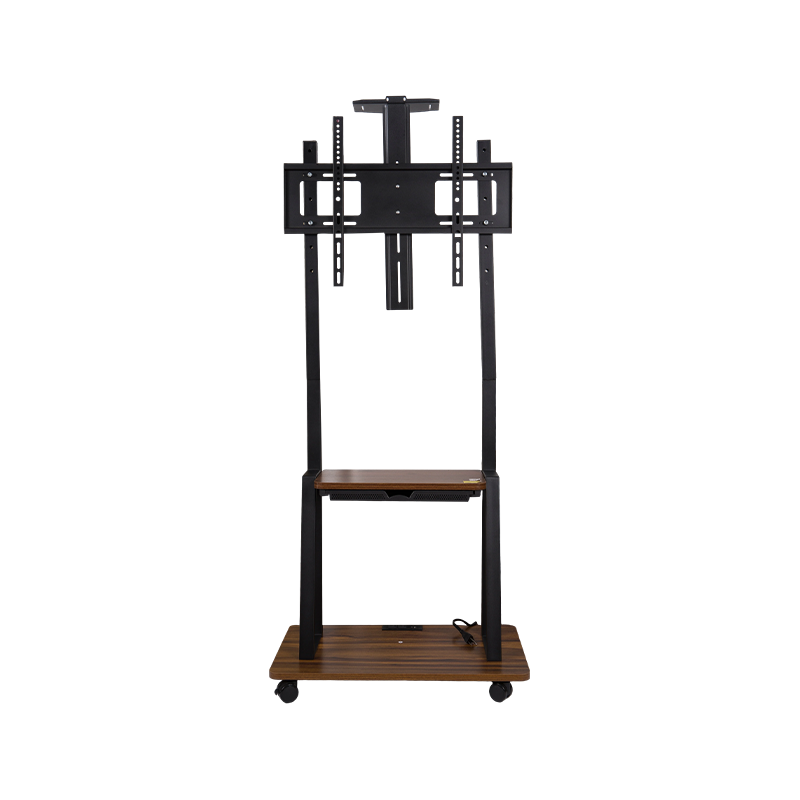
This size class turns up wherever a screen needs to travel: huddle rooms and small classrooms, clinic training corners, trade show booths, retail floors, and hotel function spaces. Most stands in the category stand roughly 1000 to 1500 mm tall, which places the center of the screen near seated eye level, and most include a single shelf for equipment.
Match a Stand to Your Screen in Four Steps
Two minutes with a tape measure prevents most returns. Work through the steps below in order.
Confirm screen size and weight
Read both numbers from the panel's specification label, not from memory. Use the panel weight without its own desk stand, since that base comes off when you mount the screen.
Find the VESA pattern
Measure the horizontal and vertical spacing between the mounting holes on the back of the panel in millimeters. A 100x100 pattern covers most panels up to about 40 inches; larger panels move to 200x200 and beyond. The stand's bracket must list your pattern exactly.
Add a load margin
Choose a stand rated at least 25 percent above the combined weight of the panel and any shelf equipment. A rolling stand takes dynamic loads every time it crosses a door threshold or stops short, so a rating that only matches the static weight leaves nothing in reserve.
Decide on braking and locking
Count how often the stand will move and who will move it. Any stand that travels between rooms needs brakes on at least two casters; stands used around children, patients, or the public should have all four wheels lockable.
Why Frame Material and Weld Quality Decide Lifespan
The frame separates a stand that lasts from one that loosens. Quality small mobile TV stands use cold-rolled steel columns and brackets, commonly between 1.2 and 2.0 mm thick, finished with powder coating that resists the chips and scratches of daily transport. On a well-made stand, the mounting plate holes line up with the panel's VESA threads without forcing, the brackets sit square, and the joints show clean, continuous welds.
That precision comes from the production process. Mounting plates cut on laser machines hold hole positions to tight tolerances, so a bracket marked 100x100 actually measures 100x100. Brackets formed on CNC press brakes stay square, which keeps the screen level without shimming. Frames welded by robotic welding cells receive consistent penetration at every joint, unlike the uneven beads common on hand-welded budget frames.
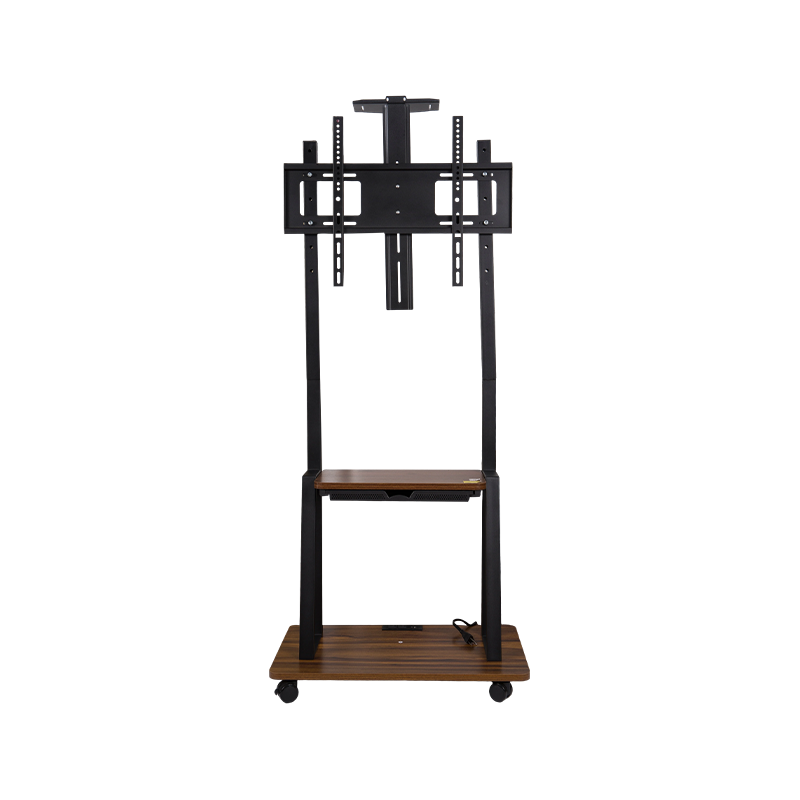 Mobile TV Stand for Flexible Viewing and PresentationsThis mobile TV stand is made from high-strength metal with precision laser cutting, CNC bending, and robotic welding for accurate mounting and stable load-bearing. Adjustable height and angles, plus a wear- and corrosion-resistant finish, suit meetings, home entertainment, and commercial displays.View Product →
As a sheet metal factory, we run that entire chain under one roof: laser cutting, CNC bending, robotic welding, and powder coating. Mobile TV stands produced this way are exported to Europe, the Americas, and Southeast Asia, and the same process supports custom work. If you need a stand matched to an unusual screen, a specific shelf layout, or a brand color, our customization service works from drawings or samples, and our article on how custom sheet metal fabrication benefits industries explains where that flexibility pays off in real projects.
Five Mistakes That Shorten a Mobile Stand's Life
Most of the problems buyers report trace back to one of five decisions made at purchase time.
Undersized base
A tall column on a narrow base tips when bumped. Check the base width against the screen height, especially for panels 43 inches and up.
Weak or unbraked casters
Two locking casters is the working minimum. Hard plastic wheels also mark floors; polyurethane rolls quieter and protects tile and wood.
Overloaded shelf
Shelf ratings usually run 5 to 10 kg. A media player, camera, and mounting hardware add up faster than most buyers expect.
Ignored cable routing
Loose cables snag on door frames and get crushed under wheels. Route them inside the column or along the frame with clips.
Skipped floor check
Thresholds, carpet pile, and ramps change how a stand rolls. Larger casters, around 75 mm, cross uneven floors with far less jolting.
Frequently Asked Questions
What screen sizes does a small mobile TV stand support?
Most models in this class are built for 23 to 43 inch panels, with some extending to 50 inches. Size alone does not decide fit, though. Check the VESA pattern and the panel weight first, because those two numbers determine whether the bracket mounts cleanly and whether the column can carry the load.
Are locking casters really necessary?
Yes. A screen on unlocked casters will creep whenever the floor is slightly uneven, and a moving display is a genuine safety risk around children, patients, and customers. Fit brakes on at least two wheels and lock them every time the screen is stationary.
How much load capacity is enough?
Add the panel weight to everything mounted on the stand, then choose a rating at least 25 percent higher. The margin absorbs the dynamic forces of rolling over thresholds and stopping abruptly, which static ratings do not account for.
Can small mobile TV stands be ordered with custom brackets or colors?
In OEM or bulk quantities, yes. Because the frame is fabricated from steel sheet, mounting plates, shelf layouts, height ranges, and powder coat colors can all be adapted during production. That level of adjustment is one of the main advantages of working directly with a sheet metal manufacturer rather than buying off-the-shelf stock.